
Maths under pressure
The quantitative bar is the single biggest differentiator at BCG. We drill multi-layer calculations to the point where the arithmetic stops consuming your attention.

How the firm recruits here, why the case maths is harder than at McKinsey or Bain, what the job pays, and where candidates lose the offer.
New to consulting in the region? Start with the complete guide.
BCG runs four offices across the region and describes Riyadh, Dubai and Doha as its hub cities. It is one of the most active recruiters in the Gulf, and the interviews here carry a distinctly higher quantitative bar than the other two MBB firms.
Riyadh, Dubai, Abu Dhabi and Doha. Clients in Kuwait, Oman and Bahrain are served from those offices rather than from local ones. Platinion, BCG's technology arm, operates out of Dubai, Doha and Riyadh, which matters if you are targeting technology work rather than generalist consulting.
Four offices, three of them designated hub cities, with client coverage extending across the wider GCC.
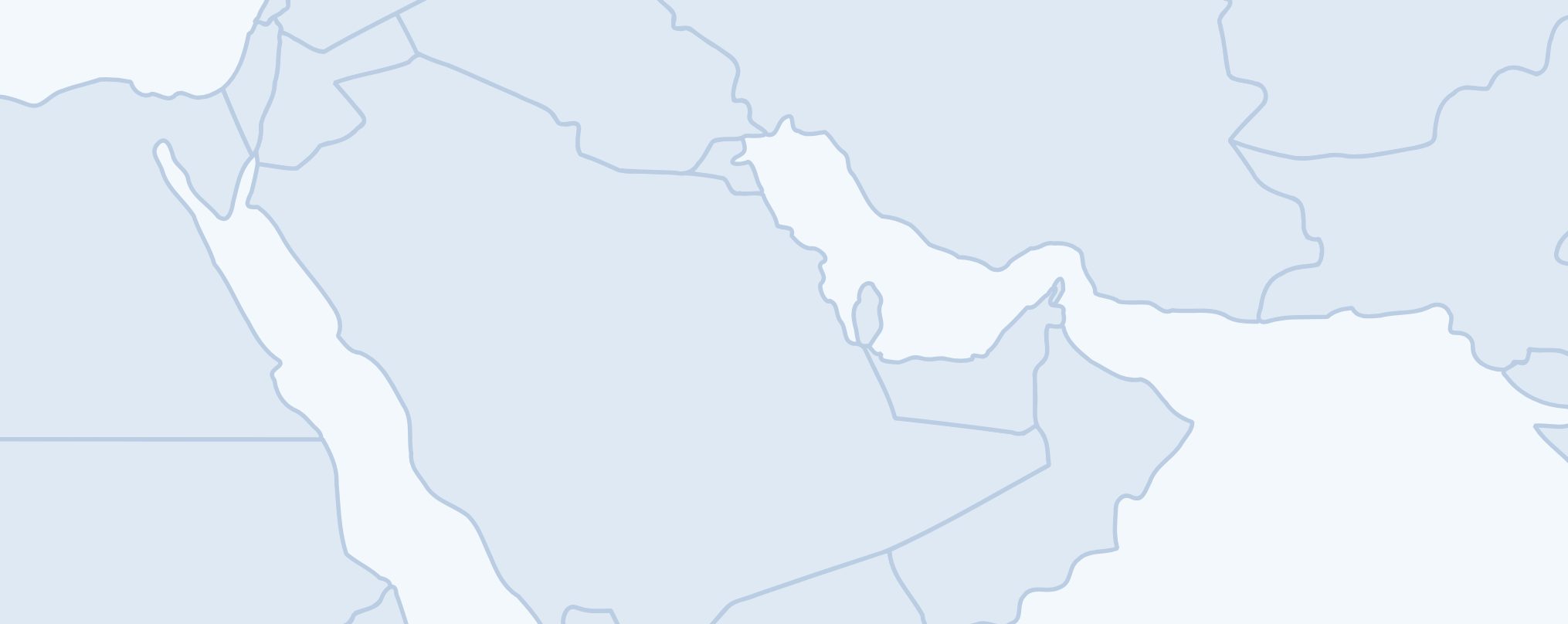
Kuwait, Manama and Muscat show client coverage rather than offices. Base map: Wikimedia Commons, public domain.
BCG does not publish regional headcount or revenue. Both figures are market estimates. Headcount covers all staff in the region, not consulting staff alone.
BCG sits closer to the centre of government in Saudi Arabia than either of the other two MBB firms. A large share of its regional work runs through Vision 2030 implementation rather than advisory work at arm's length, and its reported client base spans the Saudi sovereign wealth and energy complex, including PIF, Aramco and NEOM.
In the UAE, BCG was reported by Bloomberg in 2026 to be working with Abu Dhabi's L'Imad fund, the sovereign investor formed by integrating ADQ and holding more than $300 billion in assets, on a reorganisation of parts of its portfolio.
Where the firm is strongest here:
The Doha office has grown quickly enough to nearly double its floor space, and BCG has been promoting senior partners into Riyadh, both signals of where the firm is investing.
Worth knowing before you network. A specific, informed approach to the right person beats a generic one every time.
| Office | Leadership | Focus |
|---|---|---|
| Dubai and Abu Dhabi | Maya El Hachem, Managing Director and Senior Partner | UAE public and private sector |
| Riyadh | Andrea Nogara and Rami Rafih, Managing Directors and Senior Partners | Saudi Arabia, the largest share of the regional portfolio |
Leadership changes. Check the firm's regional people page before you reach out.
BCG cases are more rigorous than McKinsey's or Bain's, and the difference shows up most in the maths. Expect intricate calculations, more layers to work through, and less tolerance for approximation than you will find at the other two firms.
The case governance sits between the other two as well. BCG has no fixed library that interviewers draw from, but every case an interviewer intends to use must be submitted to and approved by the recruitment and talent committee. Cases are individual, but vetted.
| Firm | Where the case comes from |
|---|---|
| McKinsey | Interviewers design their own from real projects, with no central approval |
| BCG | Interviewers bring their own, but each must be approved by the talent committee |
| Bain | A database of pre-approved cases, reviewed for consistent style and difficulty |
Preparing for all three firms with a single approach is the most common preparation mistake we see.
BCG has been pushing hard to hire GCC nationals and Arabic speakers, although a large share of the offices remains European. If you are a Gulf national or fluent in Arabic, that is a real advantage here at the moment.
Worth knowing before you apply, and BCG is the firm most exposed to it. After years of heavy spending, Saudi Arabia has begun prioritising outlays and pulling back on consulting. Bloomberg reported in 2026 that BCG was among the biggest losers from the shift, with PIF business down sharply, although the firm has not been shut out and work around NEOM and other large developments continues.
| Level | What the level is | Typical time to next level |
|---|---|---|
| Associate | Undergraduate entry | 2 to 3 years |
| Consultant | MBA and advanced degree entry, or promotion from Associate | 2 to 3 years |
| Project Leader | Runs the team and the client day to day | 2 to 3 years |
| Principal | Owns client relationships, starts selling | 3 to 4 years |
| Partner | Full ownership of accounts | |
| Managing Director and Partner | Firm leadership |
On schedule, Associate to Partner runs to roughly 9 to 13 years. As at the other MBB firms, promotion is up-or-out: you either progress on schedule or you leave.
BCG sits roughly 15% above McKinsey on total compensation at equivalent levels. Gulf packages are paid tax-free.
| Level | Total compensation, UAE offices |
|---|---|
| Associate | AED 315,000 to 400,000 |
| Consultant | AED 690,000 to 865,000 |
| Project Leader | AED 885,000 to 1,380,000 |
| Principal | AED 1,200,000 to 1,640,000 |
| Partner and above | AED 1,700,000 and above |
Packages combine fixed pay including housing, a performance bonus, and benefits: an end-of-service allowance paid annually rather than on exit, employee discounts, and catering in the office.
Ranges reflect offers our candidates have received alongside market data. They vary by office, entry level and prior experience, so treat them as indicative rather than a quote.
We hold 13+ full BCG cases reported from interviews in this region, with exhibits, model answers and scoring guidance, written in the firm's own format. They sit alongside 135+ cases and prompts across MBB and Tier 2.
Our coaches are ex-MBB Senior Managers and Associate Partners who led interviewing and recruiting for their firms in this region.
The quantitative bar is the single biggest differentiator at BCG. We drill multi-layer calculations to the point where the arithmetic stops consuming your attention.
Mock interviews built to expose loose logic early, because BCG interviewers will. Structure applied to hard problems rather than templates applied to easy ones.
How you carry yourself is assessed alongside how you think. We work on delivery, composure and the confidence to hold a position under challenge.
The maths is. BCG cases carry more intricate calculations with more layers and less tolerance for approximation. The structuring bar is comparable across the three firms, but candidates who are shaky on numbers are exposed faster at BCG.
Yes. The process includes an online assessment stage with the Casey chatbot case, sitting between the CV screen and the first round of interviews.
No, but they are not free to improvise either. Interviewers bring their own cases, and each one must be submitted to and approved by the recruitment and talent committee before it is used.
Currently, yes. BCG has been pushing hard to hire GCC nationals and Arabic speakers, although a large share of the offices remains European. Gulf nationality or Arabic fluency is a real advantage right now.
BCG sits roughly 15% above McKinsey on total compensation at equivalent levels, counting fixed pay including housing, bonus, and benefits such as an annually paid end-of-service allowance.
A free 30-minute call, a clear diagnosis, and a plan. Nothing to pay until you decide to continue.